
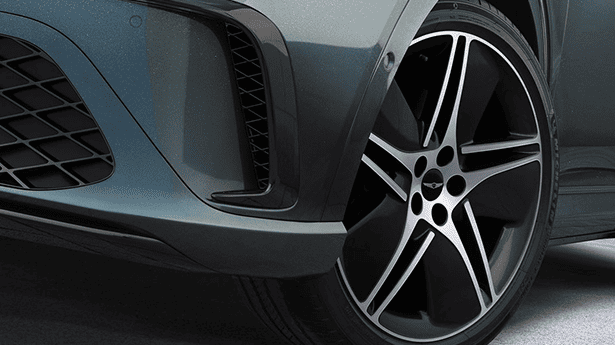
Following the factory maintenance schedule is essential for preserving balanced handling, stopping distance, and ride quietness across the lineup. On luxury sedans like the 2027 Genesis G80 and performance SUVs like the 2027 Genesis GV70, front and rear tires encounter vastly different mechanical forces. Front tires absorb steering friction, cornering loads, and the majority of braking weight transfer, while rear tires experience distinct torque stresses during acceleration. Rotating the tires redistributes these wear loads evenly across all four positions.
Genesis recommends rotating your tires every 8,000 miles or 12 months, whichever comes first, to promote uniform tread wear and protect vehicle handling. Vehicles driven under severe operating conditions or equipped with continuous all-wheel-drive systems may require tire rotations every 5,000 to 7,500 miles to prevent irregular wear patterns from developing.
During daily city commutes through Columbus, frequent stop-and-go acceleration and tight maneuvering accelerate front shoulder wear. Regular rotation helps prevent premature tread cupping and feathering, which can otherwise lead to cabin vibration and increased road noise. When you bring your vehicle in for scheduled care, our certified technicians combine tire rotation with a visual brake inspection, pressure check, and multi-point evaluation.
To arrange your vehicle's next routine maintenance, visit our service center location or give our service team a quick call to confirm the recommended interval for your specific driving conditions.
How Long Do Genesis Tires Usually Last and How Often Should They Be Replaced?
Standard original equipment tires on a Genesis typically last between 25,000 and 50,000 miles, but every tire must be replaced at 6 years from its manufacture date regardless of remaining tread depth. Ultra-high-performance summer tires fitted to sport packages may feature softer rubber compounds that wear faster, often requiring replacement between 20,000 and 30,000 miles.
Tire lifespan is governed by a combination of cumulative mileage, physical age, road conditions, and environmental exposure. Over time, the structural rubber in a tire oxidizes and hardens, losing the elasticity required to maintain maximum grip on wet or frozen pavement. In regions with cold winter cycles, sub-freezing temperatures and exposure to road salt accelerate chemical aging inside the tread compounds and sidewalls. Even if a vehicle driven primarily for short suburban errands in Westerville retains deep tread blocks after several years, an aged tire poses a higher risk of structural degradation.
The manufacturing age of a tire can be confirmed by reading the four-digit DOT date code molded into the sidewall. The first two digits indicate the week of production, while the final two digits state the calendar year. For example, a code reading 1221 indicates the tire was manufactured during the 12th week of 2021. Once a tire reaches six years of age, routine professional inspections become mandatory, and replacement is recommended at or before six years to uphold factory safety standards. On larger luxury platforms like the 2027 Genesis GV80, keeping fresh rubber on all four corners maintains optimal compliance from the electronic control suspension.
What Warning Signs and Tread Depths Mean Genesis Tires Need Immediate Replacement?
Genesis tires require immediate replacement when the tread wear indicators form a solid rubber band across the tread grooves at 1/16 inch (2/32 of an inch) of remaining depth, or if you detect sidewall bulges, deep cracks, or exposed cord fabric. While 2/32 of an inch represents the absolute legal wear limit, industry standards and manufacturer guidelines advise replacing tires at 4/32 of an inch to maintain safe traction on wet roads.
As tread depth declines below 4/32 of an inch, the tire's capability to channel water away from the contact patch decreases significantly, elevating the risk of hydroplaning during heavy rainstorms. Beyond tread measurement, physical visual inspection reveals critical indicators of internal tire distress that necessitate immediate attention:
- Sidewall Bulges or Bubbles: Indicates internal structural impact damage to the tire carcass, creating an imminent blowout hazard.
- Cracking or Checking: Deep weather cracking along the sidewall or tread shoulders caused by age, heat, and atmospheric exposure.
- Exposed Cords or Steel Belts: Severe abrasion or extreme misalignment that has worn away the protective tread rubber down to the internal structural plies.
- Persistent Pressure Loss: A tire that repeatedly loses air pressure due to structural porosity, rim bead leaks, or unrepairable punctures.
- Unresolved Cabin Vibration: High-speed vibration that persists after wheel balancing, indicating internal tread separation or structural distortion.
When replacement tires are required, sourcing factory-approved original equipment tires through our Genesis parts center ensures your replacement set maintains the precise speed rating, load index, and acoustic dampening characteristics engineered into your luxury vehicle.
Why AWD Genesis Systems Require Replacing All Four Tires at Once
All-wheel-drive Genesis models require replacing all four tires simultaneously when tread depth variation between tires exceeds 2/32 of an inch. Operating an all-wheel-drive vehicle with unevenly worn tires forces the front and rear axles to rotate at different speeds, creating continuous mechanical resistance and thermal buildup inside the center differential and transfer case.
The advanced All-wheel drive systems featured across the 2027 Genesis GV80, 2027 Genesis G80, and 2027 Genesis GV70 utilize electronic control units that monitor individual wheel speeds thousands of times per second. When a new tire with full tread depth is paired with three partially worn tires, the smaller rolling circumference of the worn tires makes them rotate faster. The vehicle's traction management software interprets this speed variance as wheel slip, engaging clutch packs continuously when no actual slip is occurring.
This constant driveline binding can cause premature wear to expensive mechanical components and lead to jerky power distribution during acceleration. To maintain long-term reliability and preserve drivetrain warranty coverage, matching overall tire diameter across both axles is essential. If a single tire suffers unrepairable damage while the remaining three tires have minimal wear, replacing the full set or acquiring a precision-shaved replacement tire restores identical rolling circumferences across all four positions.
When to Rotate Genesis Tires Sooner Than Scheduled and Key Maintenance Practices
Genesis tires should be rotated earlier than the standard 8,000-mile interval if you observe uneven shoulder wear, frequent stop-and-go city driving, or regular heavy cargo loads. Implementing consistent preventive maintenance habits—including monthly inflation checks and annual wheel alignments—is the most effective way to maximize overall tread life.
During routine service visits, owners often ask whether nitrogen inflation or seasonal alignment checks make the biggest difference in tire longevity; maintaining proper cold inflation pressure month-to-month yields the most consistent protection against irregular wear. Tire pressure should always be set according to the cold inflation numbers printed on the driver's door pillar placard rather than the maximum pressure listed on the tire sidewall. Under-inflation causes rapid wear on the outer tread shoulders and increases rolling resistance, while over-inflation concentrates wear along the center ribs and compromises ride quality.
Correct wheel alignment is equally critical to tire health. Hitting severe potholes or road obstructions can alter suspension angles, causing tires to drag sideways as they roll down the highway. A toe misalignment of just one degree can scrub tread off a tire over a few thousand miles. Performing a routine wheel alignment check every 12,000 miles or whenever uneven shoulder feathering appears protects your tire investment. To keep your vehicle operating smoothly and preserve proper service history records, you can book a service appointment online for a comprehensive tire inspection and rotation.
Common Questions About Genesis Tire Inspections and Lifespan
Q: Should old Genesis tires be replaced even if they have plenty of tread remaining?
Yes, tires older than 6 years from their date of manufacture should be replaced regardless of remaining tread depth. Over time, the rubber compounds dry out and lose structural integrity due to exposure to temperature fluctuations, UV radiation, and atmospheric oxygen. An aged tire carries a higher risk of sidewall cracking or tread separation even on low-mileage vehicles.
Q: Can a Genesis dealer measure tread depth during routine service?
Yes, factory-trained technicians measure tire tread depth during every multi-point inspection. Using digital or analog tire depth gauges across the inner, center, and outer tread grooves, technicians verify exact wear levels and identify early alignment or suspension issues before severe tire damage occurs.
Q: What is the difference between directional and non-directional tire rotations?
Directional tires feature specialized tread patterns engineered to roll in one direction to maximize water displacement and can only be rotated front-to-back on the same side of the vehicle. Non-directional tires feature symmetrical tread blocks and can be rotated in cross patterns between drive and steering axles, allowing for more even distribution of shoulder wear.
Q: Does skipping scheduled tire rotations affect my warranty coverage?
Skipping scheduled tire rotations can jeopardize treadwear mileage warranties provided by tire manufacturers. Most tire manufacturers mandate documented rotations every 5,000 to 8,000 miles to validate claims for premature tread wear, as irregular wear patterns caused by lack of rotation are not covered under warranty.
Q: What maintenance steps help Genesis tires last as long as possible?
Maintaining correct cold tire inflation pressure on a monthly basis, adhering to the factory 8,000-mile rotation schedule, and inspecting wheel alignment annually are the most effective habits to prolong tire lifespan. Driving smoothly by avoiding hard acceleration and aggressive cornering also reduces rubber friction and extends tread life.
